U.N. Security Council Extends MINURSO Mandate to Oct. 30, 2026; South Africa and Polisario Warn Resolution Favors Morocco's Plan
October 31, 2025 | United Nations, Federal
This article was created by AI summarizing key points discussed. AI makes mistakes, so for full details and context, please refer to the video of the full meeting. Please report any errors so we can fix them. Report an error »
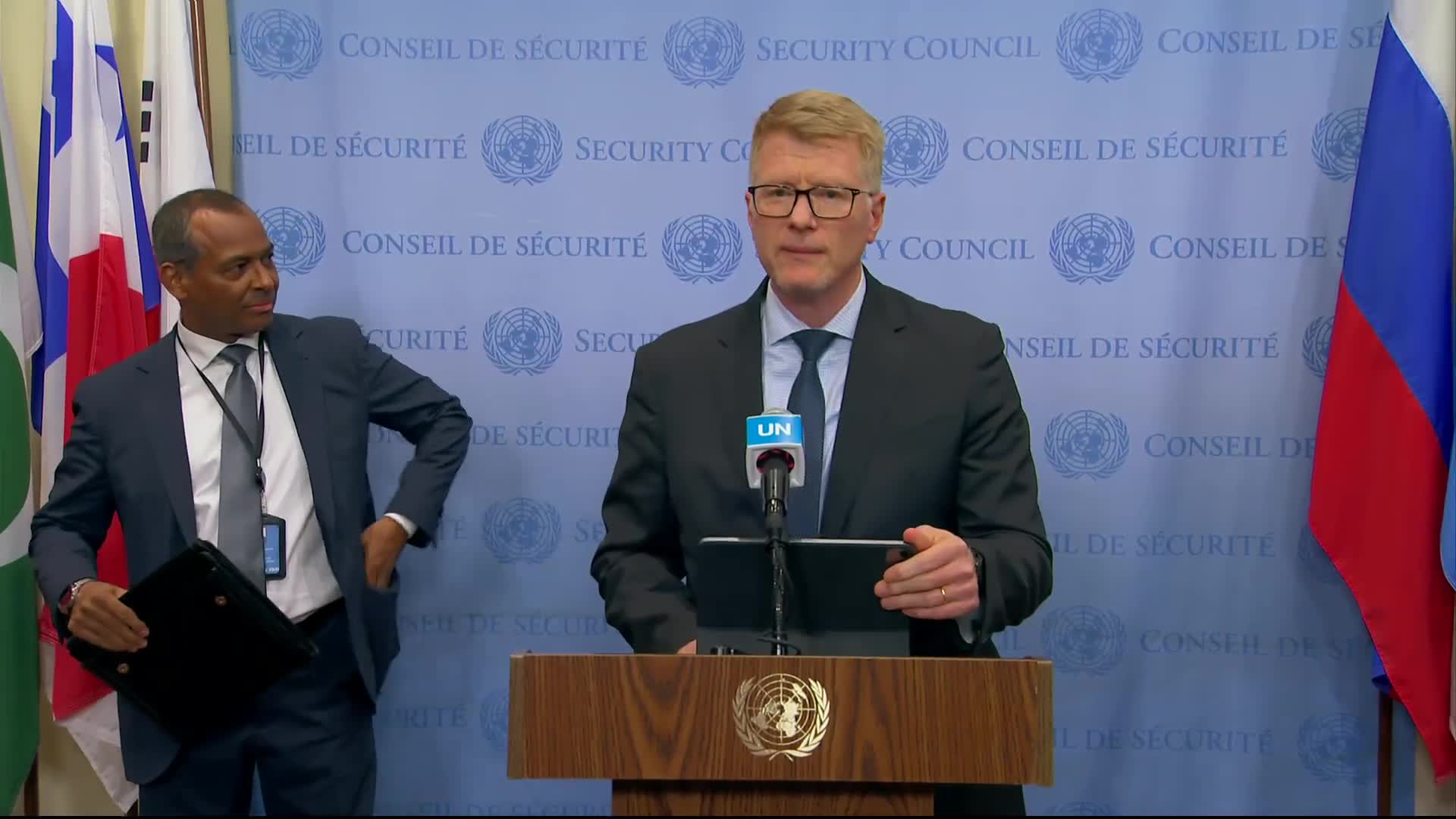
The U.N. Security Council renewed the mandate of the United Nations Mission for the Referendum in Western Sahara (MINURSO) through Oct. 30, 2026, a move South Africa and the Polisario Front said on Saturday risks privileging Morocco's proposal over the Sahrawi right to self‑determination.
"We would like to express our disappointment ... that the U.N. Security Council, since 2007 recognized and acknowledged both the Moroccan autonomy plan or proposal and that of the Sahrawi people," Martinez von Skalpweg, deputy permanent representative of South Africa to the United Nations, told reporters after the resolution was adopted. He said the latest text "has taken the unfortunate step of support for conducting negotiations based only on the Moroccan plan while neglecting the self determination and proposals of the Sahrawi people."
South Africa described Western Sahara as both a peace and security issue and a matter of decolonization and called for direct talks between Morocco and the Polisario Front. "Through MINURSO, the United Nations must take urgent steps towards holding this long promised referendum on self determination so that the Sahrawi people can determine their own destiny," von Skalpweg said, adding confidence in the U.N. secretary‑general's personal envoy, Staffan de Mistura.
Mohammed Omar, representative of the Polisario Front, said the Security Council's extension of MINURSO "testifies to the Security Council's continued commitment to a just, lasting solution," but he warned the resolution must not be read as recognition of Moroccan sovereignty. "In other words, and in plain English, it does not imply recognition of Morocco's illegal military occupation of Western Sahara," Omar said, and thanked Algeria for its support as well as Russia, China and Pakistan for abstaining in the vote.
Omar described Morocco's presence in Western Sahara as "50 years of illegal occupation," called the Polisario Front the "legitimate and the sole representative and voice of the Sahrawi people," and said the movement remains "ready to engage positively in the U.N.'s peace process." He said the Polisario had submitted an expanded proposal to the U.N. secretary‑general "on the October 20" and that the leadership was assessing the Security Council language before issuing an official position.
Reporters asked whether the resolution altered sovereignty over Western Sahara; Omar replied that the Security Council authored the resolution and that the Polisario would make its formal response in due course. Omar also criticized Morocco's autonomy proposal as a "travesty" that some council members declined to characterize as credible or serious during debate.
The resolution renewing MINURSO's mandate was mentioned by speakers as a step intended to preserve prospects for a negotiated settlement and a referendum; the transcript records abstentions by Russia, China and Pakistan but does not provide a full vote tally.
Next steps described by speakers included a Polisario internal assessment and a continued call from South Africa for U.N. action to enable a referendum. The parties and the Security Council remain at odds over framework and preconditions for negotiations.
"We would like to express our disappointment ... that the U.N. Security Council, since 2007 recognized and acknowledged both the Moroccan autonomy plan or proposal and that of the Sahrawi people," Martinez von Skalpweg, deputy permanent representative of South Africa to the United Nations, told reporters after the resolution was adopted. He said the latest text "has taken the unfortunate step of support for conducting negotiations based only on the Moroccan plan while neglecting the self determination and proposals of the Sahrawi people."
South Africa described Western Sahara as both a peace and security issue and a matter of decolonization and called for direct talks between Morocco and the Polisario Front. "Through MINURSO, the United Nations must take urgent steps towards holding this long promised referendum on self determination so that the Sahrawi people can determine their own destiny," von Skalpweg said, adding confidence in the U.N. secretary‑general's personal envoy, Staffan de Mistura.
Mohammed Omar, representative of the Polisario Front, said the Security Council's extension of MINURSO "testifies to the Security Council's continued commitment to a just, lasting solution," but he warned the resolution must not be read as recognition of Moroccan sovereignty. "In other words, and in plain English, it does not imply recognition of Morocco's illegal military occupation of Western Sahara," Omar said, and thanked Algeria for its support as well as Russia, China and Pakistan for abstaining in the vote.
Omar described Morocco's presence in Western Sahara as "50 years of illegal occupation," called the Polisario Front the "legitimate and the sole representative and voice of the Sahrawi people," and said the movement remains "ready to engage positively in the U.N.'s peace process." He said the Polisario had submitted an expanded proposal to the U.N. secretary‑general "on the October 20" and that the leadership was assessing the Security Council language before issuing an official position.
Reporters asked whether the resolution altered sovereignty over Western Sahara; Omar replied that the Security Council authored the resolution and that the Polisario would make its formal response in due course. Omar also criticized Morocco's autonomy proposal as a "travesty" that some council members declined to characterize as credible or serious during debate.
The resolution renewing MINURSO's mandate was mentioned by speakers as a step intended to preserve prospects for a negotiated settlement and a referendum; the transcript records abstentions by Russia, China and Pakistan but does not provide a full vote tally.
Next steps described by speakers included a Polisario internal assessment and a continued call from South Africa for U.N. action to enable a referendum. The parties and the Security Council remain at odds over framework and preconditions for negotiations.
Don't Miss a Word: See the Full Meeting!
Go beyond summaries. Unlock every video, transcript, and key insight with a Founder Membership.
✓
Get instant access to full meeting videos
✓
Search and clip any phrase from complete transcripts
✓
Receive AI-powered summaries & custom alerts
✓
Enjoy lifetime, unrestricted access to government data
30-day money-back guarantee
