BRN executive officer urges evidence-based use of direct patient-care and narcotics requirements in intervention agreements
October 31, 2025 | California Board of Registered Nursing, Boards and Commissions, Executive, California
This article was created by AI summarizing key points discussed. AI makes mistakes, so for full details and context, please refer to the video of the full meeting. Please report any errors so we can fix them. Report an error »
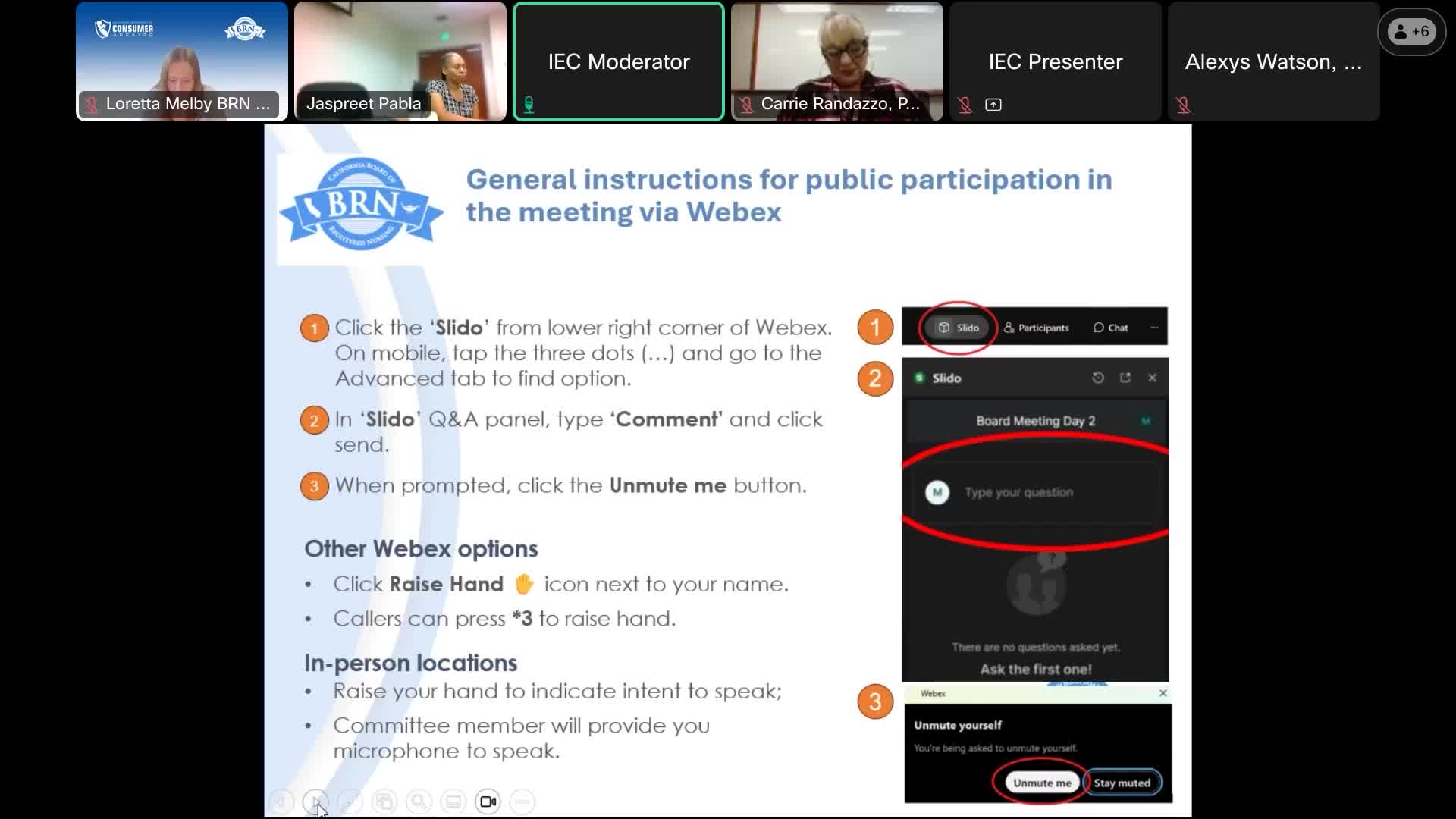
Melby said the board asked staff to examine cases, including recommendations that extended program participation beyond three years, to determine whether evidence supported those conditions. "The board said they wanted me to immediately start reviewing all of the IEC recommendations that asked for direct patient care, access to or passing narcotics, or kind of you have to do that in order to complete," Melby said.
Why it matters: committee members evaluate whether nurses in the intervention program have demonstrated sufficient rehabilitation to return to clinical roles. Requiring direct patient care or access to controlled medications carries both potential patient-safety benefits and logistical burdens for returning nurses and hiring employers.
What Melby reported: she reviewed 22 cases initially after the August board meeting and said only one required review since then, which she described as evidence that committee guidance is being followed. She told the IEC she plans to ask the board in November to end her special-review assignment and return routine reviews to the program manager, Jaspreet, for case-by-case assessment.
Melby advised IEC members to require direct patient care or narcotics-passing only when there is demonstrable patient-safety evidence: "If there is evidence of additional patient safety" risk, then requiring those conditions is appropriate; otherwise, the committee should seek additional evidence before making such mandates, she said.
She emphasized individualized decisions and noted practical constraints. For nurses who have been out of direct patient care for many years, Melby said requiring a new-to-specialty placement solely to fulfill an intervention condition can introduce competency and training risks that outweigh the goal of supervised reentry. She also cautioned that "access to narcotics" is not the only clinical risk; non-narcotic medications can also be misused and should be considered in assessments.
Melby described program limits and relapse realities: the IEC's intervention term (typically three to five years) does not guarantee long-term abstinence and the board provides paths to reenter the program if relapse occurs. She also asked committee members to consider medical limitations (for example, when a participant is medically unable to perform direct care) when drafting completion conditions.
Committee response and next steps: committee members asked clarifying questions during and after the presentation but raised no motions. Melby said she will continue to attend IEC meetings through mid-November, will provide additional education as needed, and expects routine review responsibilities to transition to the program manager. She invited members to submit questions or requests for additional materials before the November board meeting.
Provenance: Topic introduction at 00:11:16 (agenda item 6) and discussion close at 00:27:36.
Don't Miss a Word: See the Full Meeting!
Go beyond summaries. Unlock every video, transcript, and key insight with a Founder Membership.
30-day money-back guarantee
Sponsors
Proudly supported by sponsors who keep California articles free in 2025

