Montgomery City board approves temporary T‑Mobile 'COW' at 2100 Chestnut Street to replace Jackson Hospital rooftop site
October 31, 2025 | Montgomery City, Montgomery County, Alabama
This article was created by AI summarizing key points discussed. AI makes mistakes, so for full details and context, please refer to the video of the full meeting. Please report any errors so we can fix them. Report an error »
Brian Sullivan of Crafton Communications, representing T‑Mobile South LLC and Affordable Real Estate Group LLC, told the board the apparatus will be a tow‑behind trailer with a mast that stands about 75 feet when raised, secured by outriggers and guy wires and enclosed by a perimeter security fence. "Our agreement with the landlord is for up to 2 years," Sullivan said, adding the company intends to develop a permanent site during that period.
Sullivan said the Jackson Hospital rooftop site provided substantial T‑Mobile coverage around the hospital, along Interstate 85 and in areas east of Alabama State University, and that removal of that rooftop facility would create gaps in service. He showed coverage maps in the packet comparing current coverage, the expected gap if the hospital site is removed, and the restored coverage with the COW installed.
The COW will be sited on private property owned by Affordable Real Estate Group LLC on the north side of I‑85 in a grass area behind a doctor's office (Alabama Vascular), Sullivan said. He told the board the unit and its anchors would remain entirely on private property and would not extend into the interstate right‑of‑way, though they would be within roughly 30 to 40 feet of the right‑of‑way.
Sullivan described power as being provided through a new meter on a drop pole and said, if approved, the company would apply for a building permit and expects the COW to arrive in mid‑November and be operational within about a week thereafter.
Board members asked about setbacks from Chestnut Street, right‑of‑way encroachment, payment to the landlord and site occupation; Sullivan confirmed access is paved from Chestnut, the lease/access payment is in place, and the property is occupied by a doctor's office. He also said it generally takes a minimum of about a year to bring a permanent tower on air, which is why the temporary device could remain for up to two years.
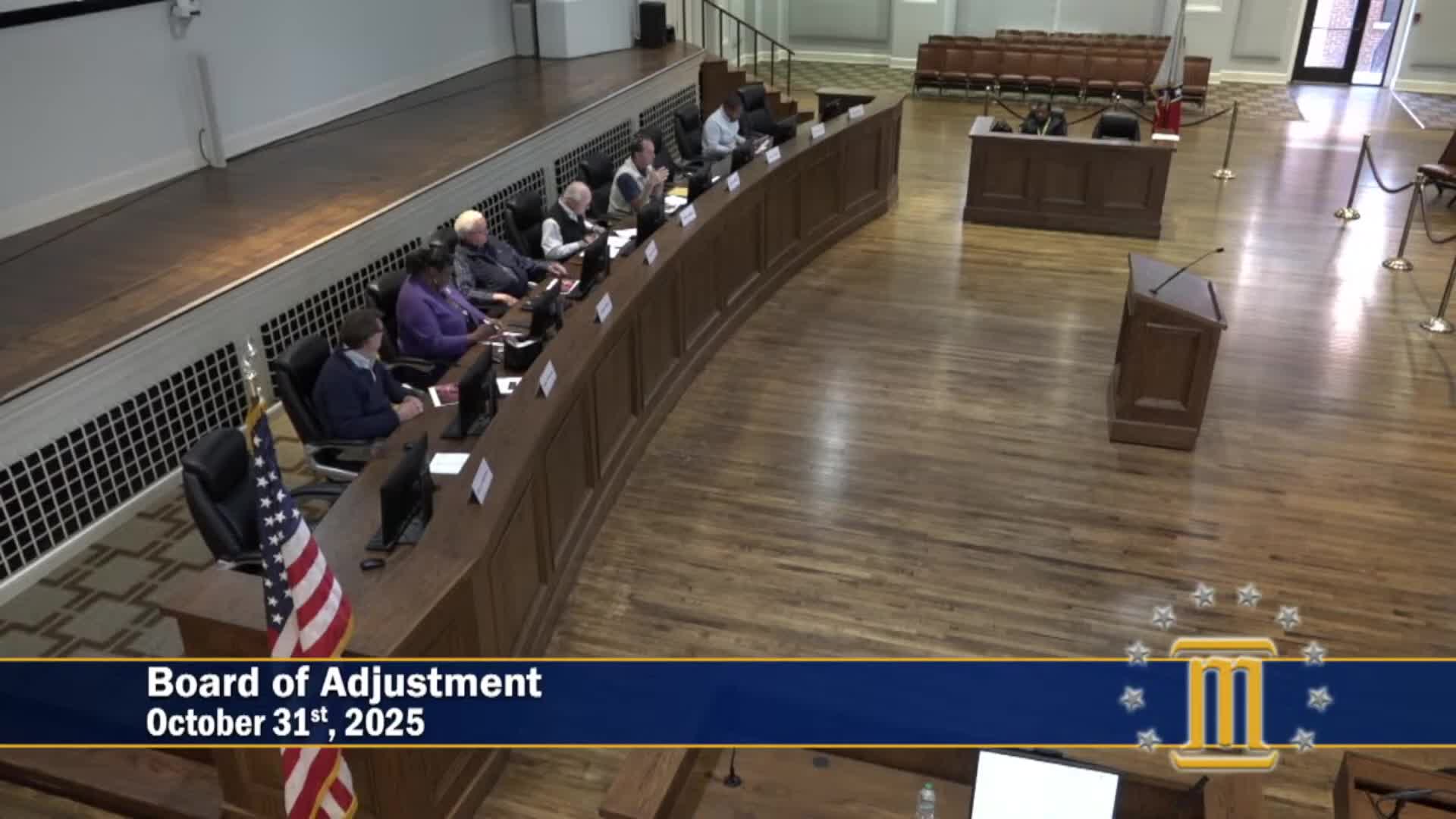
A motion to approve the special‑exception request was made by Quentin Burke and seconded by Vice Chairman George Howell. The chair called for a hand vote; the board voted unanimously in favor and the chairman told the applicant they were "good to go."
Don't Miss a Word: See the Full Meeting!
Go beyond summaries. Unlock every video, transcript, and key insight with a Founder Membership.
30-day money-back guarantee
Sponsors
Proudly supported by sponsors who keep Alabama articles free in 2025

