Sky Valley needs assessment: survey finds housing, mental health and access-to-care gaps
October 31, 2025 | Monroe City, Snohomish County, Washington
This article was created by AI summarizing key points discussed. AI makes mistakes, so for full details and context, please refer to the video of the full meeting. Please report any errors so we can fix them. Report an error »
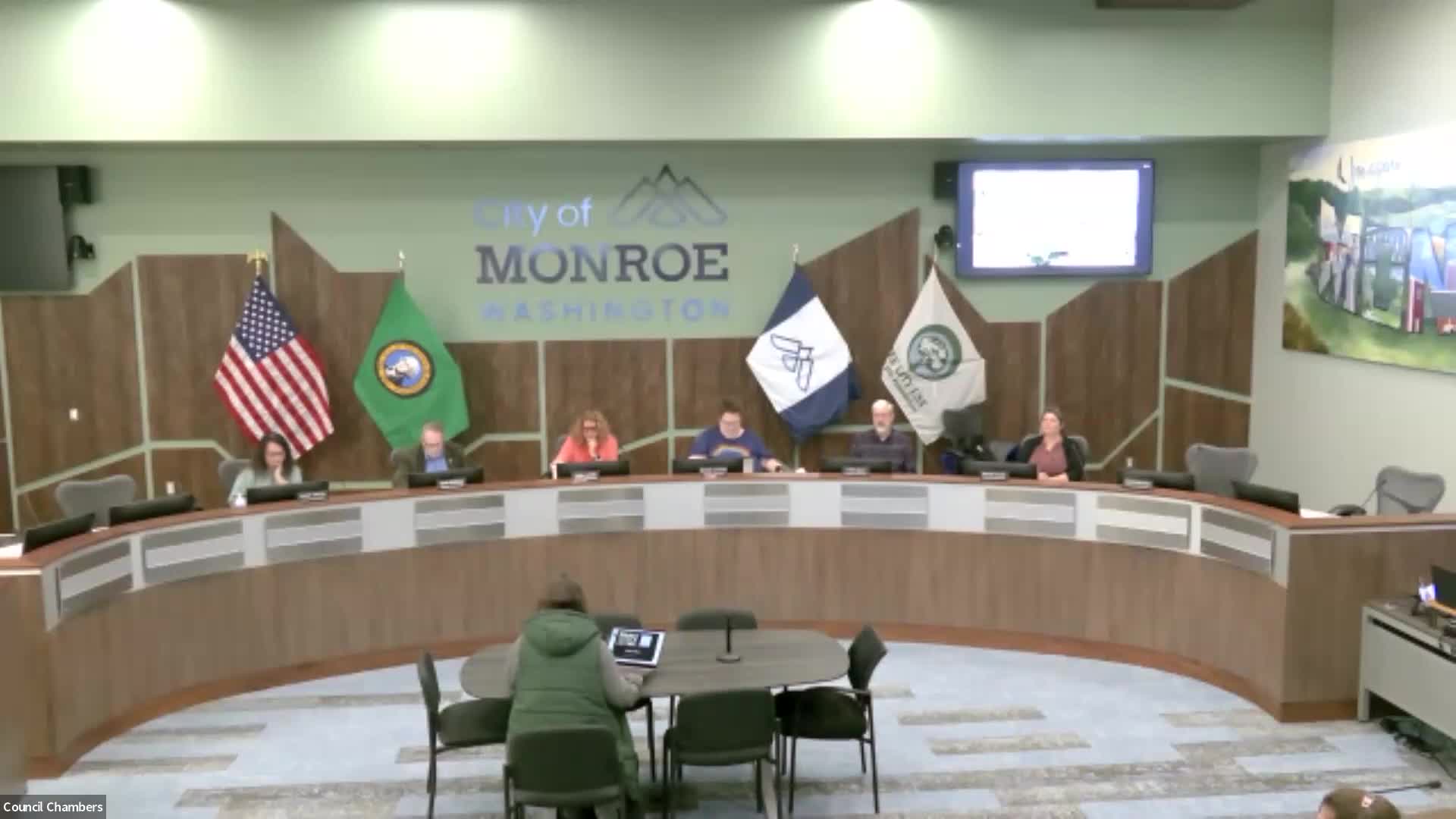
The assessment included 289 survey responses, 18 key-informant interviews and six focus groups, and combined those primary data with federal, state and county secondary sources, Caitlin said. "For our survey, we were able to include 289 responses," she said, and added that the sample achieved a 95% confidence interval for representativeness of the Sky Valley area.
Why it matters: The Sky Valley region (covering Monroe and nearby ZIP codes) has a higher share of residents with limited English proficiency and fewer local health providers than neighboring counties, increasing the likelihood that people with low incomes or limited English will face barriers to services. The report notes that fewer than 13% of housing units are affordable at 60% of area median income and that 37% of owners with a mortgage and 42% of renters are housing-cost burdened.
Key findings include elevated measures of mental-health distress — the report cites a 26% diagnosis rate for depression and a 17% rate of frequent mental distress among adults in Sky Valley — and youth mental-health concerns, including a reported 9.5% rate of suicide attempts among eighth graders on the Healthy Youth Survey. The assessment also documents higher-than-average opioid-overdose rates in parts of the region and ongoing shortages of primary care and dental providers, particularly for patients who rely on Medicaid or Medicare.
The report lists transportation and child care as additional barriers to employment and services: more than 17% of commuters travel more than one hour to work, and respondents cited cost and lack of available slots as top barriers to child care. Food insecurity appeared in interviews and 2-1-1 call data as a recurring need, and local food providers told assessors they are managing reduced federal support and requests for culturally specific food options.
Quotes from the meeting: Caitlin summarized the scope and data sources and emphasized the prominence of housing as a top concern: "This assessment was first done in 2021... For our survey, we were able to include 289 responses." A member of the public commenting during Q&A said bluntly of youth mental-health findings, "Kinda disheartening. Kinda made me kinda sad. Eighth grader suicide."
Recommendations and next steps: The presentation released a set of broad recommendations: support affordable-housing production and emergency housing, improve the behavioral-health and substance-use continuum (including rapid-response services), increase access to medical, dental and nutrition services, improve regional transportation and traffic safety, expand affordable child care and after-school programs, and advocate for a community drop-in center to provide basic needs and housing navigation. Caitlin said the city will use the assessment to pursue grant funding and that the human services coordinator, Rachel, is the staff contact for follow-up and strategic planning.
What was not decided: The Planning Commission received the presentation and discussed follow-up but did not take formal action on policy changes at the meeting. The presenter said the full report and slides are in the meeting packet and that the city council previously adopted the report by resolution.
Ending: Commissioners and members of the public asked staff about how the city and county will maintain up-to-date data between five-year assessments; staff said regularly convened program partners and the Human Services Advisory Board help "keep a finger on the pulse," and that the assessment is intended as a tool to guide grant-seeking and a five-year strategic plan.
View the Full Meeting & All Its Details
This article offers just a summary. Unlock complete video, transcripts, and insights as a Founder Member.
30-day money-back guarantee
Sponsors
Proudly supported by sponsors who keep Washington articles free in 2025

