Cheyenne consultants outline EPA-funded climate plan, flag data-center gap and call for targeted outreach
October 31, 2025 | Cheyenne, Laramie County, Wyoming
This article was created by AI summarizing key points discussed. AI makes mistakes, so for full details and context, please refer to the video of the full meeting. Please report any errors so we can fix them. Report an error »
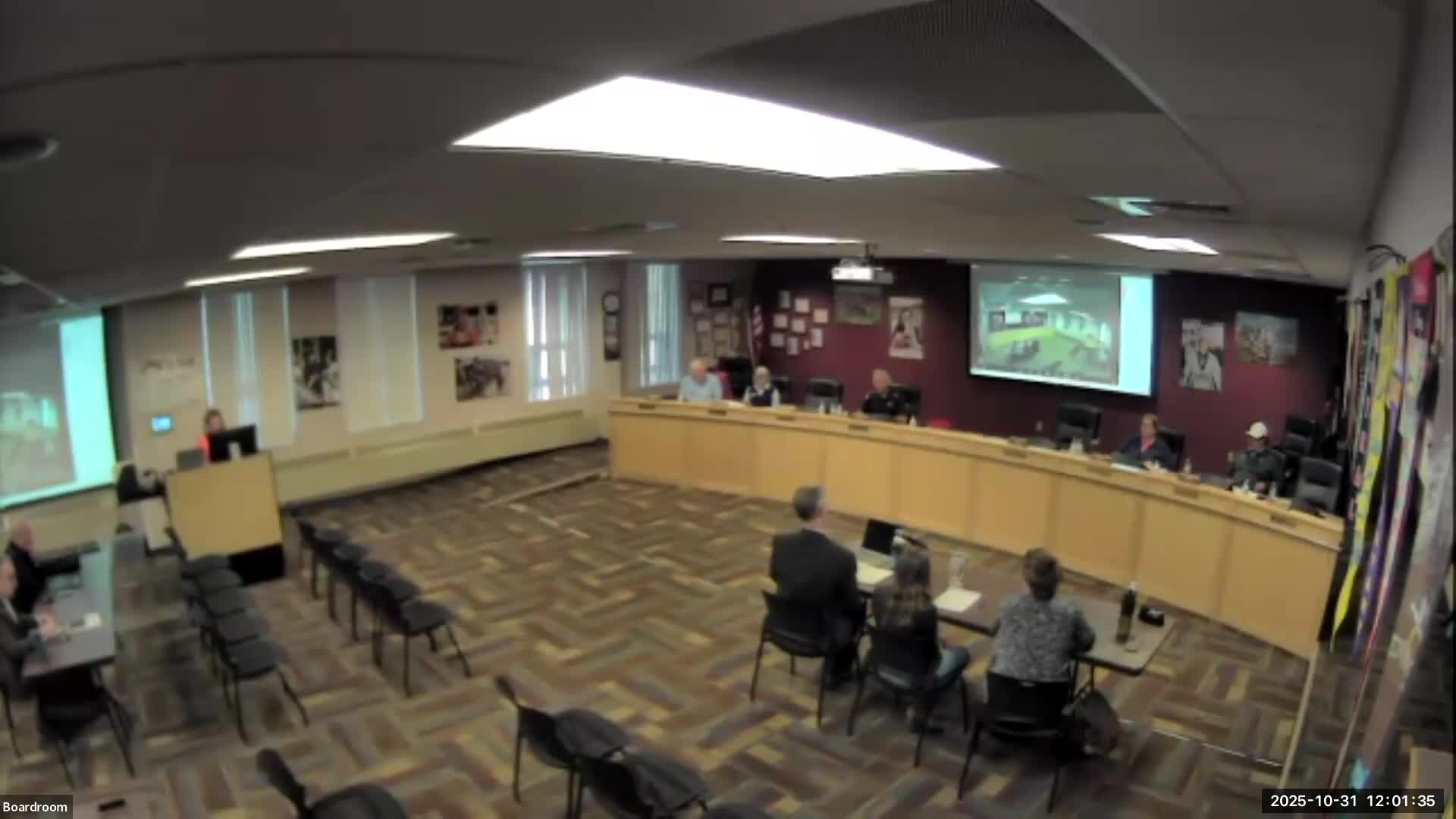
Consultants from Lotus Engineering and Sustainability presented the “Prospering Together” plan to the Cheyenne City Council on topics related to greenhouse‑gas emissions, community priorities and draft goals for reducing local pollution.
Renee Smith, economic resource administrator for the City of Cheyenne, told the council the city was the lead applicant for an EPA Climate Pollution Reduction Grant that funds the planning work and that consultants would deliver the final plan and required grant materials after additional analysis and engagement.
Tom Herrod, managing director at Lotus Engineering and Sustainability, said the 2023 greenhouse‑gas inventory for the Cheyenne metropolitan statistical area shows the built environment (homes, businesses and industry) is the largest emissions source and that transportation is the second largest. He said the inventory uses standard scope definitions: scope 1 (direct), scope 2 (electricity) and scope 3 (indirect) emissions.
"This project includes the Cheyenne MSA, which obviously is Laramie County as well, but the city of Cheyenne was the lead applicant and the project manager on that side of the grant," Herrod said.
The consultants presented a business‑as‑usual projection that shows a modest decline in emissions over time driven by grid decarbonization and efficiency, but they cautioned that the 2023 inventory does not include potential new data‑center emissions because those data were not yet available. Herrod said the grant timeline allows the team to add new data, including data‑center emissions, as it becomes available.
Council members pressed for more detail. Councilman Escobar asked whether data centers planned to use on‑site solar. "I’ve not seen a lot of the detail in terms of where those sources of energy are coming from," Herrod said. Sarah Bloom, director (as referred to in the meeting), told the council that many data centers are sourcing power through Black Hills and by contracting with off‑site solar and wind projects and that none of the data centers proposed within city limits were planning on-site solar arrays at this time.
Brianne Boyle, senior associate with Lotus, reviewed engagement tactics and results. She said the team held three in‑person workshops, more than 20 informational interviews, three sector meetings, two rapid online surveys, an online forum and tabling at a city employee picnic. About 600 people responded across outreach tactics, and the project team quantified responses to identify priorities.
Four themes emerged most frequently: stronger public engagement and education; energy‑efficiency and building retrofits to reduce high energy bills; quality affordable housing; and safe active‑transportation options, especially downtown walkability.
Consultants proposed five focus areas with corresponding goals: energy and buildings (increase efficiency, expand clean energy, repurpose buildings, and ensure a mix of affordable housing); transportation (reduce single‑occupant vehicle trips, improve bike/walk safety and expand transit options); workforce (develop a skilled pipeline and preserve quality of life to attract workers); waste and water (reduce landfill waste, expand diversion and protect water supply); and natural and working lands (preserve sensitive local places).
On implementation, consultants said they have drafted strategies and identified likely partners, barriers and preliminary cost estimates. "We will include some cost estimates, but they will be high level for this planning process," Herrod said, adding that more detailed return‑on‑investment work would be part of future, investment‑ready grant pursuits by city staff.
Renee Smith told the council the project received a $1,000,000 grant and that the city's consultant contract is $330,000; she said the city has not yet contributed local tax dollars to the project. The team also said another greenhouse‑gas inventory will be completed later in the grant cycle to provide a benchmark for tracking progress.
Council discussion raised outreach and communication issues. Several members noted that city recycling, composting and greenway programs already exist and that the survey results suggested residents were unaware of those services. Council members and staff asked Lotus to prepare informational materials tied to the plan’s focus areas to improve public awareness and suggested the plan should include specific, implementable actions the city could adopt.
The consultants said the plan will be finalized after additional data updates and engagement. They recommended the city use the plan as a foundation for seeking implementation grants and for targeting programs to vulnerable groups identified in outreach (low‑income households, South Cheyenne residents, Latino communities and people in wildfire‑risk areas).
The council thanked the consultants and requested additional detail on implementation, cost estimates and outreach materials in future updates.
Renee Smith, economic resource administrator for the City of Cheyenne, told the council the city was the lead applicant for an EPA Climate Pollution Reduction Grant that funds the planning work and that consultants would deliver the final plan and required grant materials after additional analysis and engagement.
Tom Herrod, managing director at Lotus Engineering and Sustainability, said the 2023 greenhouse‑gas inventory for the Cheyenne metropolitan statistical area shows the built environment (homes, businesses and industry) is the largest emissions source and that transportation is the second largest. He said the inventory uses standard scope definitions: scope 1 (direct), scope 2 (electricity) and scope 3 (indirect) emissions.
"This project includes the Cheyenne MSA, which obviously is Laramie County as well, but the city of Cheyenne was the lead applicant and the project manager on that side of the grant," Herrod said.
The consultants presented a business‑as‑usual projection that shows a modest decline in emissions over time driven by grid decarbonization and efficiency, but they cautioned that the 2023 inventory does not include potential new data‑center emissions because those data were not yet available. Herrod said the grant timeline allows the team to add new data, including data‑center emissions, as it becomes available.
Council members pressed for more detail. Councilman Escobar asked whether data centers planned to use on‑site solar. "I’ve not seen a lot of the detail in terms of where those sources of energy are coming from," Herrod said. Sarah Bloom, director (as referred to in the meeting), told the council that many data centers are sourcing power through Black Hills and by contracting with off‑site solar and wind projects and that none of the data centers proposed within city limits were planning on-site solar arrays at this time.
Brianne Boyle, senior associate with Lotus, reviewed engagement tactics and results. She said the team held three in‑person workshops, more than 20 informational interviews, three sector meetings, two rapid online surveys, an online forum and tabling at a city employee picnic. About 600 people responded across outreach tactics, and the project team quantified responses to identify priorities.
Four themes emerged most frequently: stronger public engagement and education; energy‑efficiency and building retrofits to reduce high energy bills; quality affordable housing; and safe active‑transportation options, especially downtown walkability.
Consultants proposed five focus areas with corresponding goals: energy and buildings (increase efficiency, expand clean energy, repurpose buildings, and ensure a mix of affordable housing); transportation (reduce single‑occupant vehicle trips, improve bike/walk safety and expand transit options); workforce (develop a skilled pipeline and preserve quality of life to attract workers); waste and water (reduce landfill waste, expand diversion and protect water supply); and natural and working lands (preserve sensitive local places).
On implementation, consultants said they have drafted strategies and identified likely partners, barriers and preliminary cost estimates. "We will include some cost estimates, but they will be high level for this planning process," Herrod said, adding that more detailed return‑on‑investment work would be part of future, investment‑ready grant pursuits by city staff.
Renee Smith told the council the project received a $1,000,000 grant and that the city's consultant contract is $330,000; she said the city has not yet contributed local tax dollars to the project. The team also said another greenhouse‑gas inventory will be completed later in the grant cycle to provide a benchmark for tracking progress.
Council discussion raised outreach and communication issues. Several members noted that city recycling, composting and greenway programs already exist and that the survey results suggested residents were unaware of those services. Council members and staff asked Lotus to prepare informational materials tied to the plan’s focus areas to improve public awareness and suggested the plan should include specific, implementable actions the city could adopt.
The consultants said the plan will be finalized after additional data updates and engagement. They recommended the city use the plan as a foundation for seeking implementation grants and for targeting programs to vulnerable groups identified in outreach (low‑income households, South Cheyenne residents, Latino communities and people in wildfire‑risk areas).
The council thanked the consultants and requested additional detail on implementation, cost estimates and outreach materials in future updates.
Don't Miss a Word: See the Full Meeting!
Go beyond summaries. Unlock every video, transcript, and key insight with a Founder Membership.
✓
Get instant access to full meeting videos
✓
Search and clip any phrase from complete transcripts
✓
Receive AI-powered summaries & custom alerts
✓
Enjoy lifetime, unrestricted access to government data
30-day money-back guarantee
