Santa Barbara council reviews draft strategic plan, prioritizes downtown, housing and fiscal stability
October 31, 2025 | Santa Barbara City, Santa Barbara County, California
This article was created by AI summarizing key points discussed. AI makes mistakes, so for full details and context, please refer to the video of the full meeting. Please report any errors so we can fix them. Report an error »
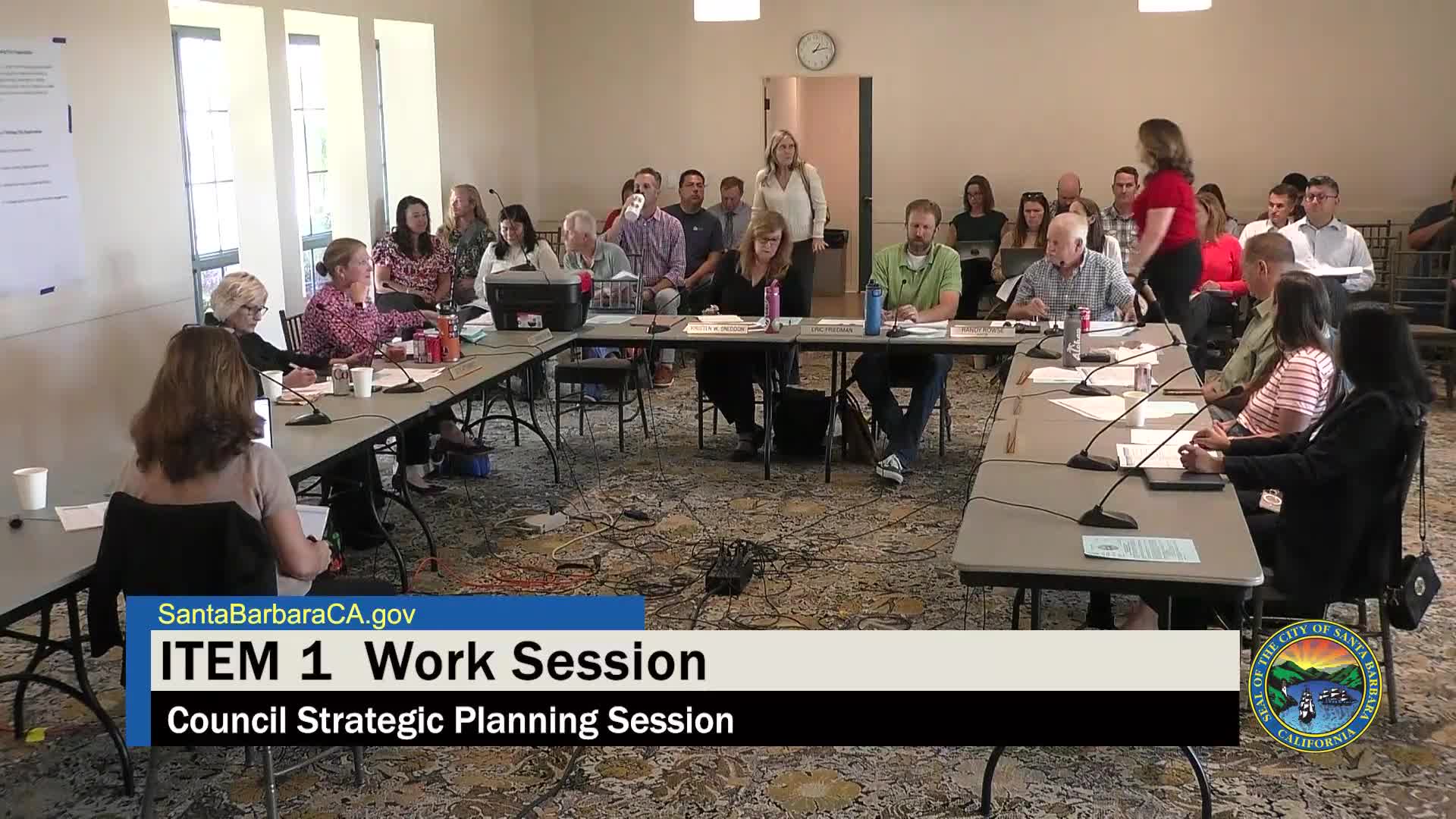
Consultants from Raftelis and city staff presented a framework of four strategic priorities — economic and community vitality; enhanced community resiliency and safety; strengthen housing and community services; and ensure a thriving city organization — and summarized input from four community focus groups attended by more than 50 residents. Staff asked the council for guidance on objectives and asked members to identify the highest near‑term priorities.
Kelly McAdoo, staff member, described the meeting as “still a working session,” and said the final draft plan will return to a regular council meeting for adoption and will allow remote participation. Nancy, a Raftelis facilitator, said the focus groups validated the four priority buckets and urged the council to pair ambitious goals with measurable, short‑term actions: “There needs to be a focus on specific actions,” she said, summarizing community feedback.
Council discussion emphasized short‑term, visible wins and clearer milestones. Several members asked that the State Street master plan include immediate “small‑bite” improvements so residents can see progress while larger design work continues. Members also pressed for faster permitting reforms to reduce delays for businesses and housing projects and requested more detail on economic development and retail strategies that would be actionable rather than studies that sit on a shelf.
On housing, the work plan lists year‑1 items to research and draft a city‑driven rent‑stabilization ordinance and steps to pursue the short‑term rental ordinance and other housing‑stability measures. Councilmember Megan Harmon and others urged work to identify city parcels for potential housing (for example, the police annex site was cited as a future opportunity) and to expand the local housing trust fund through public and private contributions. Councilmembers also discussed employer‑sponsored housing as an option and raised concerns about potential unintended consequences.
Resiliency and safety conversations focused on the Lower Laguna watershed, aging tide gates and pumps, and the need to publicize emergency protocols for flood‑prone areas. Staff said a city‑wide Drainage Master Plan will begin with the Laguna watershed and that FEMA and grant funding are being pursued for specific projects. Council members urged completing near‑term repairs and making progress on sea‑level‑rise planning and waterfront wastewater adaptation work.
Councilors used a dot‑voting exercise to show priorities at the objective level. Financial stability and the State Street master plan drew the most energy (five dots each), while housing affordability, public trust/community engagement, and simplification of the permit process received multiple votes. Staff said those rankings will guide resource allocation as the work plan is finalized and integrated with the next budget cycle.
Next steps: staff will synthesize council feedback, update the work plan with clearer year‑1 milestones, and return a draft strategic plan in a public meeting for review and adoption. Staff also said it will explore progress dashboards and reporting tools so the council and public can track outcomes over time.
View the Full Meeting & All Its Details
This article offers just a summary. Unlock complete video, transcripts, and insights as a Founder Member.
30-day money-back guarantee
Sponsors
Proudly supported by sponsors who keep California articles free in 2025

