Chaffee Housing Trust tells Lake County commissioners its land‑trust model preserves affordable homeownership
October 30, 2025 | Lake County, Colorado
This article was created by AI summarizing key points discussed. AI makes mistakes, so for full details and context, please refer to the video of the full meeting. Please report any errors so we can fix them. Report an error »
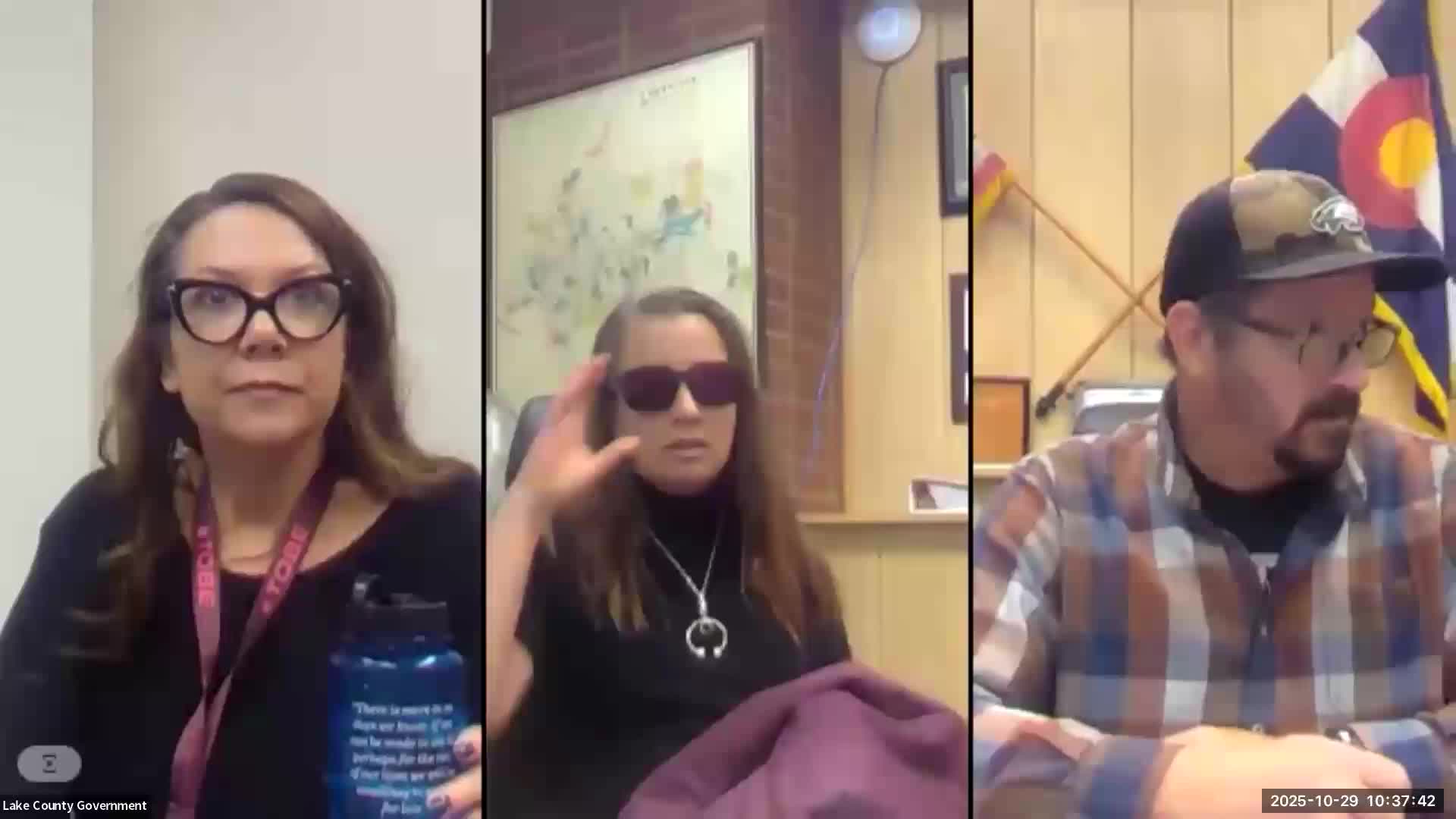
McCullough said the trust's model is designed to keep local employees anchored in their communities. “Jobs need a place to sleep at night,” he said, summarizing the trust's goal of preserving workforce housing and enabling buyers to build some equity and multigenerational wealth.
The trust described how its resale formula works: sellers receive 25% of market-based appreciation measured appraisal-to-appraisal; principal paid down through mortgage payments remains the seller's. The land trust retains the remaining appreciation within the home so the next buyer pays an entry price that preserves long-term affordability, the presenters said.
Christie Galarza outlined the trust's counseling work and production pipeline. The organization serves roughly 130 clients a year through bilingual, HUD-certified counseling that helps prospective buyers pull and repair credit, apply for mortgages and prepare for homeownership. The trust reported 42 homes completed to date; this year it sold eight homes in Salida and had another sale pending. It said it currently has about 30 homes in development, including 12 units at a railyard site, 14 units in Buena Vista and a planned acquisition of a fourplex in Poncha Springs.
On funding, the trust said it combines Department of Housing (DOH) funding, CHDO (Community Housing Development Organization) funds, down-payment assistance and grant applications such as to the Federal Home Loan Bank. McCullough said a recent award or packaging strategy would let the trust bring roughly $70,000 into a purchase and up to $50,000 in down-payment assistance for an eligible buyer, which can materially reduce the price needed from an owner-seller.
The trust also described work to replace aging manufactured homes with modular units. Presenters said a factory in Pueblo that had produced their modules closed during construction; the trust worked with factory workers and is now partnering with a new plant in Walsenburg. They said the modular product could be placed on conventional foundations at an estimated cost near $100,000, enabling conventional 30-year financing and lower long‑term ownership costs compared with chattel loans for older manufactured homes.
The presenters emphasized long-term stewardship and foreclosure protections that come from active monitoring of ground-lease fees, participation in condominium owners associations and the ability to intervene when homeowners fall behind on payments. McCullough said the trust aims for a century-long horizon for community land holdings so parcels remain available for affordable uses in perpetuity.
On operations, the trust said its general operating budget is limited (the organization reported annual operating revenue under $500,000) and highlighted CHDO funding that provides $50,000 annually contingent on a local match; staff said municipal contributions are used as matching funds and urged local jurisdictions to consider modest annual support. The presenters said they would attend an upcoming county meeting in November to discuss projects and partnerships.
Commissioners thanked the presenters and asked questions about deed restrictions, resale mechanics and coordination with the regional housing authority and local housing coalition. Staff and presenters discussed next steps including coordinating on project marketing and pursuing municipal and foundation funding to sustain operations.
Don't Miss a Word: See the Full Meeting!
Go beyond summaries. Unlock every video, transcript, and key insight with a Founder Membership.
30-day money-back guarantee
Sponsors
Proudly supported by sponsors who keep Colorado articles free in 2025

